Fast growth can hide the friction building underneath. When growth slows, that friction surfaces and the company starts to feel heavy: rework, slower decisions, and teams pulling in different directions. Here's why it happens, and what to watch for before it hits the numbers.
Leadership agreement is necessary before a major change. But it is not proof that the organization understands the direction in the same way. When interpretation differs across departments, Alignment Drift™ begins long before the missed commitments, rework, and slower execution become visible.
Most people want to do meaningful work and contribute to their organization's success. A well-aligned organization provides the clarity and shared understanding that allow individuals, teams, and leaders to perform at their best.
Every initiative inherits the organization's level of alignment. If people interpret strategy differently before execution begins, the outcome will reflect it.
Private equity hold periods have become significantly longer, but many firms are still operating with an integration model built for much shorter investments. As ownership timelines extend, maintaining organizational alignment becomes an ongoing operating discipline, not a one-time event.
AI can accelerate execution, but it can't create organizational alignment. Organizations with shared understanding will amplify better decisions. Those without it will simply scale inconsistency faster.
Leadership alignment sets the direction, but organizational alignment determines whether strategy is executed as intended. Learn why consistent interpretation across every level of the organization is essential for execution success.
The day after an acquisition is usually filled with optimism.
The deal is complete. The announcements have been made. New priorities are being discussed. Plans are already forming about how to improve the business and accelerate growth.
Most leaders assume organizational misalignment begins somewhere below them. A manager isn’t communicating. A department isn’t collaborating. Employees aren’t executing. Sometimes that’s true. But in my experience, it often starts much higher.
Most leaders assume that some alignment is better than none. They're right. But there is a hidden problem that can emerge when alignment exists in only part of an organization.
Most organizations assume execution problems are caused by workload, market conditions, or poor performance. But inside many companies, there is another cost quietly slowing everything down. An execution tax. Not a financial tax. An operational one.
The managers most organizations lose first are usually the ones holding everything together. Not because they care less. Because they care more. Great managers want clarity. Momentum. Progress. They want to build strong teams, hit goals, and feel like their effort is contributing to something meaningful. That's exactly why misalignment hits them harder than anyone else.
Organizations rarely slow down all at once.
The drag builds quietly. Revenue still grows. Teams still hit targets. Customers still buy. From the outside, everything looks fine.
But internally, something is working against you.
When a company gets acquired, there’s excitement.
For good reason.
It usually means something was built well. A founder created value. A team executed. The business proved itself in the market.
Private equity or an acquiring company sees that and says: there’s more here. More growth. More opportunity. More upside.
For the people inside the company, it feels like validation.
We did something right.
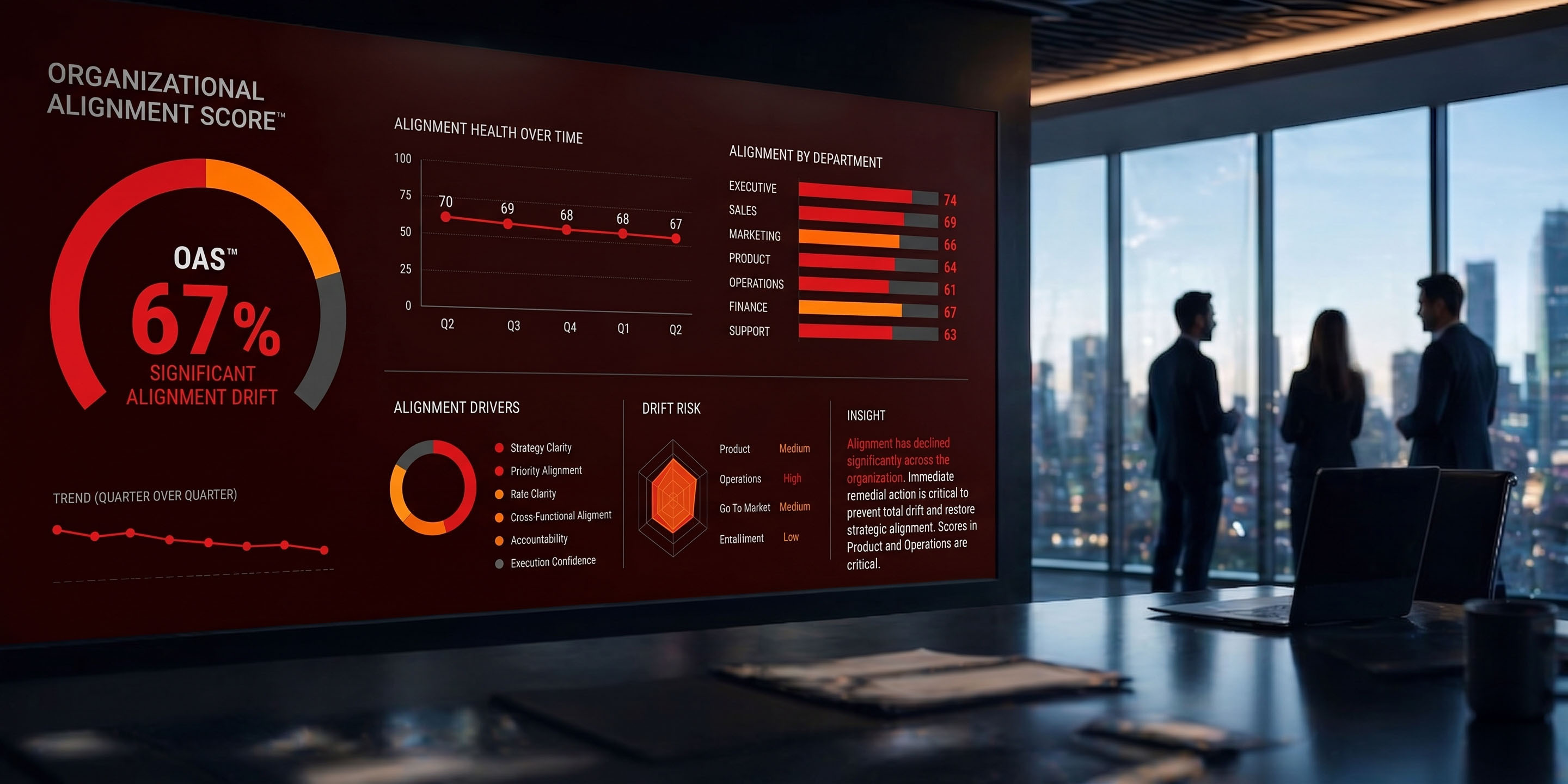
Alignment Drift™ is the hidden gap between what leadership intends and what teams actually understand and execute. Over time, that gap creates execution drag, slows growth, and impacts performance long before it appears in financial reports.
Momentum is one of the most overlooked assets in business. When alignment is strong, execution accelerates, decisions move faster, and momentum compounds. But when teams begin interpreting priorities differently, organizations create invisible drag that slows progress, increases friction, and erodes performance long before it shows up in financial metrics.
At the start of every year, organizations build a plan. Budgets are approved, targets are defined, and priorities seem clear on paper. But once execution begins, gaps start to appear, not because the strategy is wrong, but because teams begin interpreting it differently.
Every leadership team agrees on one thing:
Alignment matters.
When teams are aligned, execution improves.
Goals get hit.
The organization moves forward as one.
There’s no debate.
But there’s a gap most leaders don’t see.
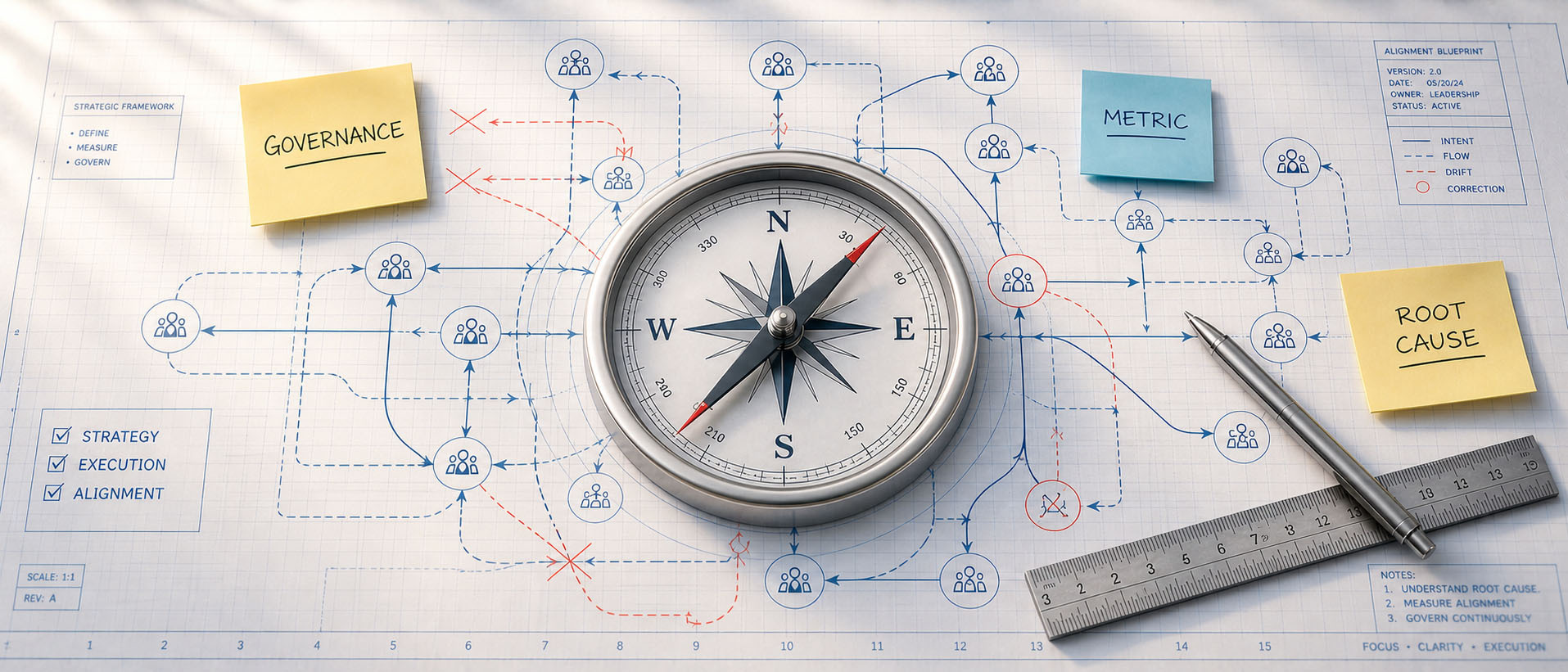
Most organizations are not failing at alignment because they lack commitment. They are failing because they have never understood the root cause, never had a metric to track it, and never built the structure to sustain it. Those are three distinct problems. And solving only one of them is not enough.
When something feels off inside an organization, the default response is to schedule a meeting. If the problem hasn’t been identified yet, that is the wrong first move. And repeating it — without diagnosing what is actually breaking down — makes the underlying problem worse.
Misalignment is not a people problem. It is not a culture problem. It is a financial problem. And it shows up in your results whether or not you have named it.
Revenue is a lagging indicator. By the time it drops, the problem has already been building for months. The OAS™ is a leading indicator. It tells you what’s coming before it shows up in your numbers.
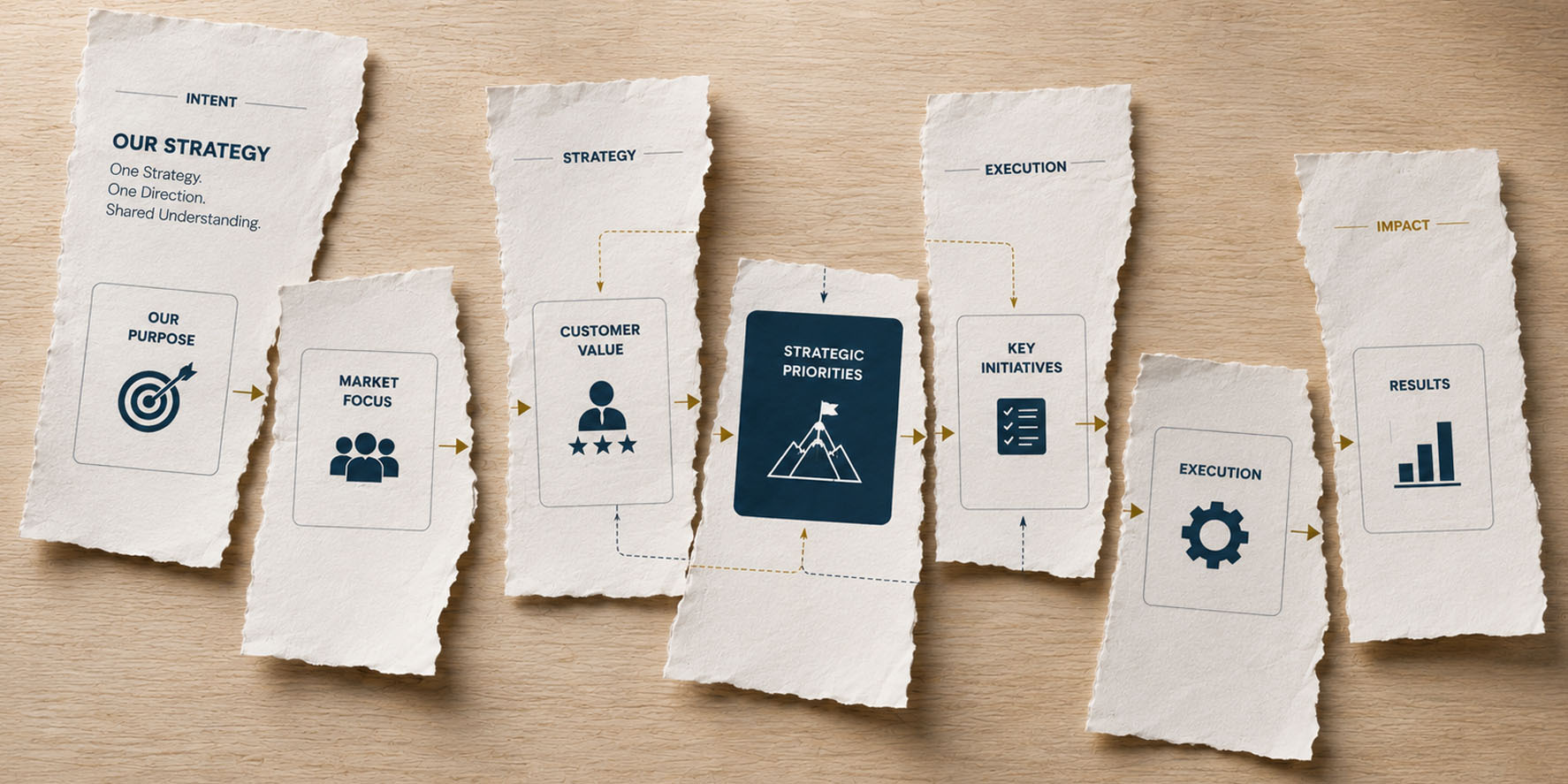
Leadership agreement is necessary before a major change. But it is not proof that the organization understands the direction in the same way. When interpretation differs across departments, Alignment Drift™ begins long before the missed commitments, rework, and slower execution become visible.
Most people want to do meaningful work and contribute to their organization's success. A well-aligned organization provides the clarity and shared understanding that allow individuals, teams, and leaders to perform at their best.
Every initiative inherits the organization's level of alignment. If people interpret strategy differently before execution begins, the outcome will reflect it.
Private equity hold periods have become significantly longer, but many firms are still operating with an integration model built for much shorter investments. As ownership timelines extend, maintaining organizational alignment becomes an ongoing operating discipline, not a one-time event.
AI can accelerate execution, but it can't create organizational alignment. Organizations with shared understanding will amplify better decisions. Those without it will simply scale inconsistency faster.
Leadership alignment sets the direction, but organizational alignment determines whether strategy is executed as intended. Learn why consistent interpretation across every level of the organization is essential for execution success.
The day after an acquisition is usually filled with optimism.
The deal is complete. The announcements have been made. New priorities are being discussed. Plans are already forming about how to improve the business and accelerate growth.
Most leaders assume organizational misalignment begins somewhere below them. A manager isn’t communicating. A department isn’t collaborating. Employees aren’t executing. Sometimes that’s true. But in my experience, it often starts much higher.
Most leaders assume that some alignment is better than none. They're right. But there is a hidden problem that can emerge when alignment exists in only part of an organization.
Most organizations assume execution problems are caused by workload, market conditions, or poor performance. But inside many companies, there is another cost quietly slowing everything down. An execution tax. Not a financial tax. An operational one.
The managers most organizations lose first are usually the ones holding everything together. Not because they care less. Because they care more. Great managers want clarity. Momentum. Progress. They want to build strong teams, hit goals, and feel like their effort is contributing to something meaningful. That's exactly why misalignment hits them harder than anyone else.
Organizations rarely slow down all at once.
The drag builds quietly. Revenue still grows. Teams still hit targets. Customers still buy. From the outside, everything looks fine.
But internally, something is working against you.
When a company gets acquired, there’s excitement.
For good reason.
It usually means something was built well. A founder created value. A team executed. The business proved itself in the market.
Private equity or an acquiring company sees that and says: there’s more here. More growth. More opportunity. More upside.
For the people inside the company, it feels like validation.
We did something right.
Alignment Drift™ is the hidden gap between what leadership intends and what teams actually understand and execute. Over time, that gap creates execution drag, slows growth, and impacts performance long before it appears in financial reports.
Momentum is one of the most overlooked assets in business. When alignment is strong, execution accelerates, decisions move faster, and momentum compounds. But when teams begin interpreting priorities differently, organizations create invisible drag that slows progress, increases friction, and erodes performance long before it shows up in financial metrics.
At the start of every year, organizations build a plan. Budgets are approved, targets are defined, and priorities seem clear on paper. But once execution begins, gaps start to appear, not because the strategy is wrong, but because teams begin interpreting it differently.
Every leadership team agrees on one thing:
Alignment matters.
When teams are aligned, execution improves.
Goals get hit.
The organization moves forward as one.
There’s no debate.
But there’s a gap most leaders don’t see.
Most organizations are not failing at alignment because they lack commitment. They are failing because they have never understood the root cause, never had a metric to track it, and never built the structure to sustain it. Those are three distinct problems. And solving only one of them is not enough.
When something feels off inside an organization, the default response is to schedule a meeting. If the problem hasn’t been identified yet, that is the wrong first move. And repeating it — without diagnosing what is actually breaking down — makes the underlying problem worse.
Misalignment is not a people problem. It is not a culture problem. It is a financial problem. And it shows up in your results whether or not you have named it.
Revenue is a lagging indicator. By the time it drops, the problem has already been building for months. The OAS™ is a leading indicator. It tells you what’s coming before it shows up in your numbers.











.jpg)




.jpg)

.jpg)